
Aging in place · Boca Raton
Accessible & Aging-in-Place Bathrooms in Boca Raton
An accessible bathroom is one you can use safely and on your own, now and as your needs change. For many Boca Raton owners, that means removing the step over the tub, adding grab bars where hands naturally reach, raising the toilet to chair height and making room to move with a walker or wheelchair. The CDC reports that about one in four adults over 65 falls each year, and the bathroom is one of the most common places it happens because surfaces are hard and wet. We remodel bathrooms in homes and condos across Boca Raton with step-free and low-threshold showers, built-in benches, handheld showers, slip-resistant tile, wider doorways and comfort-height toilets. Some changes take a day, others are part of a full remodel. Private homes do not have to meet ADA rules, but we use them as a guide for heights and clearances. Original Medicare generally does not pay for these changes, though some Medicare Advantage plans and VA grants may help. This page shows what to change first, what it costs and how to plan ahead.
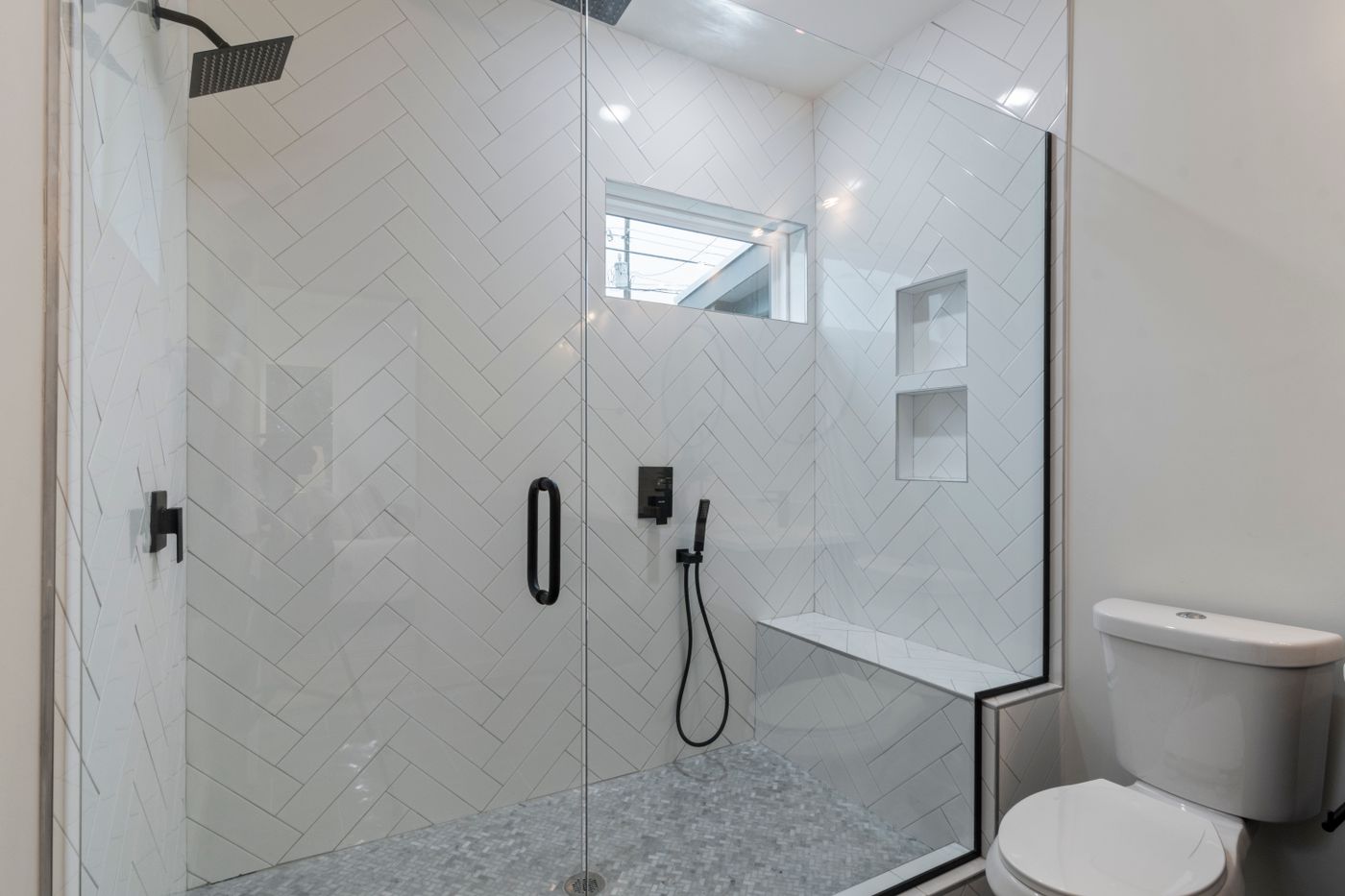
- Step-free and low-threshold showers
- Grab bar blocking in every wall we open
- Planned for walkers and wheelchairs
Where to start
Bathroom changes that help prevent falls
These are the changes we recommend most, roughly in order of how much they help:
- Remove the tub wall. Replace the tub with a step-free or low-threshold walk-in shower, or a walk-in tub if you need to soak.
- Add grab bars. By the toilet, inside the shower and at the shower entry. Towel bars are not grab bars and will pull out of the wall.
- Sit while you shower. A built-in bench or a fold-down seat, with a handheld shower on a slide bar you can reach while seated.
- Raise the toilet. A comfort-height toilet with a seat 17 to 19 inches high makes standing up much easier.
- Fix the floor. Slip-resistant tile, no loose mats and no lip at the bathroom door.
- Light it well. Bright, even lighting and a night light on the path from the bedroom.
- Swap knobs for levers. Lever handles on faucets and doors are easier for stiff or painful hands.
Sizes that matter
Accessibility guidelines we design around
Your home does not have to meet the ADA, but its numbers are a reliable starting point for comfort and safety.
| Feature | Guideline we use |
|---|---|
| Grab bar height | 33 to 36 inches above the floor |
| Toilet seat height | 17 to 19 inches |
| Doorway clear width | At least 32 inches |
| Wheelchair turning space | 60-inch circle of open floor |
| Shower entry | Step-free or a low curb of about an inch |
| Wet floor tile | Slip rating of DCOF 0.42 or higher |
If someone in the home uses a wheelchair today, we plan the full turning space and a roll-in shower. If not, we plan for “later”: wider doors where we can, blocking for grab bars and a shower you could roll into one day.

Paying for it
Medicare, insurance and other help
- Original Medicare generally does not cover grab bars, walk-in showers, walk-in tubs or bathroom remodels.
- Medicare Advantage plans sometimes include extra home safety benefits. Ask your plan what it covers and whether it needs a doctor’s note.
- Veterans can ask the VA about the Home Improvements and Structural Alterations (HISA) grant for medically needed changes.
- Taxes: some medically necessary home changes may count as a medical expense. Ask your tax preparer.
We cannot tell you what your plan will pay, but we can give you a written scope that lists each safety item clearly, which is what most plans and grant programs ask to see.
Aging in place in Boca Raton
Boca Raton’s median age is in the mid to high 40s, older than Florida as a whole, and many owners in communities like Boca West, Boca Pointe, Woodfield, Broken Sound and Century Village plan to stay in their homes for a long time. Most of those homes and condos were built in the 1970s and 1980s, with tubs, narrow doors and toilets that were standard then and hard to use now. Small changes made today can delay a move for years.
If you live in a condo, the association may need to approve plumbing and wall changes, so read our condo bathroom guide before you plan. For a family member who needs changes quickly, we start with the high-impact items, like grab bars and a shower seat, and plan the rest in stages.
Accessible bathroom questions
Does Medicare pay for an ADA bathroom remodel?
Original Medicare generally does not pay for bathroom remodels, grab bars or walk-in showers, because it treats them as home changes rather than medical equipment. Some Medicare Advantage plans include extra home safety benefits, so call your plan and ask. Veterans may qualify for the VA Home Improvements and Structural Alterations (HISA) grant.
How much does it cost to make a bathroom handicap accessible?
It depends on how far you go. Grab bars, a handheld shower and a comfort-height toilet are small jobs. Turning a tub into a step-free roll-in shower, widening the door and moving the vanity is a full remodel, which in Boca Raton usually falls in the $12,000 to $35,000 range for a guest-size bathroom and more for a primary bath.
What are the requirements for a wheelchair accessible bathroom in Florida?
The ADA and the accessibility chapter of the Florida Building Code set rules for public buildings, not private homes. In your own home there is no legal minimum, but those standards are a smart guide: a 60-inch turning circle, a door with at least 32 inches of clear width, grab bars 33 to 36 inches off the floor and a toilet seat 17 to 19 inches high.
What does an ADA compliant bathroom look like?
It has a step-free or roll-in shower with a seat and a handheld shower, grab bars by the toilet and in the shower, a toilet at chair height, a sink with knee space below, lever handles instead of knobs, slip-resistant flooring and enough open floor to turn a wheelchair.
Can grab bars be added later?
Yes, but it is much easier if the walls are ready. During any remodel, we add wood blocking inside the walls around the toilet, tub and shower. Then grab bars can be screwed into solid backing years later without opening the wall.
Can I make a condo bathroom accessible?
Usually, yes. Grab bars, fixtures and a low-threshold shower are normal condo projects. A true curbless shower is harder because the floor is a concrete slab over the unit below, and widening a doorway may touch walls the association controls. We plan around those limits.
Want a safer bathroom for yourself or a parent?
Tell us who uses the bathroom and what feels hard today. We will suggest the changes that help most and explain what each one involves.